
Ancient Kingdoms and Contemporary City Life in the Asia–Pacific Region
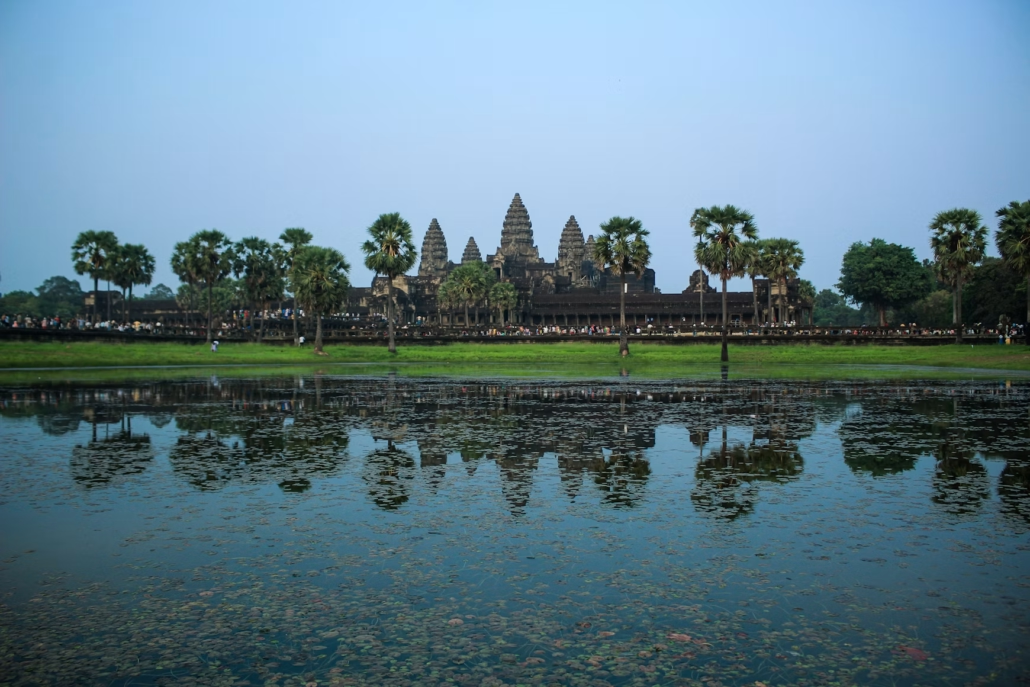
Photo Credit: unsplash
The Asia–Pacific region combines some of the world’s oldest cultural sites with rapidly developing modern cities. Travelling across countries such as Cambodia and Australia reveals strong contrasts between ancient architecture, coastal landscapes, and highly urbanised metropolitan centres, while modern transport links make it easier to experience these differences within a single itinerary.
Exploring Southeast Asia’s historical centres
Many travelers begin their regional journeys through organised Cambodia tour packages, particularly when visiting historic sites connected to the Khmer Empire. Cambodia’s road and domestic transport networks link cities such as Siem Reap and Phnom Penh while also providing access to ancient temple complexes surrounded by forests and rural landscapes. Guided itineraries are especially common around Angkor Wat, where large archaeological areas can be difficult to navigate independently without local transport. Traveling through Cambodia introduces visitors to slower-moving environments shaped by markets, river systems, and smaller communities outside the major urban centres. The contrast between highly detailed temple architecture and rapidly developing city districts becomes visible within relatively short distances. Organized travel also simplifies movement between destinations where public transport infrastructure may be less predictable than in larger Asian capitals. This approach allows travellers to focus more on cultural exploration and less on logistics. Cambodia often acts as an introduction to Southeast Asia’s historical depth. The pace of travel tends to feel gradual and observational rather than fast-moving.
Rail journeys along Australia’s southeastern coast
In Australia, taking a train to Melbourne from Sydney offers a completely different style of long-distance travel across the Asia–Pacific region. Services departing from Central Station Sydney arrive at Southern Cross Station after travelling through coastal districts, farmland, and regional towns across New South Wales and Victoria. The journey takes several hours, creating a slower transition between Australia’s two largest southeastern cities. Unlike air travel, rail passengers remain connected to the surrounding landscape throughout the route. Smaller stations and open countryside become visible parts of the experience rather than simply passing unnoticed below an aircraft. Reserved seating and onboard facilities support long-distance comfort, while large windows encourage observation of changing scenery. The route highlights the scale of Australia’s southeastern regions and the gradual differences between urban centres. Rail travel here feels less focused on speed and more connected to geography. This slower movement contrasts strongly with the faster urban rhythms of Sydney and Melbourne themselves.
Photo Credit unsplash
Siem Reap and Cambodia’s historical legacy
Siem Reap functions as the gateway to Cambodia’s most internationally recognised historical landmarks. The city itself combines tourism infrastructure with local markets, riverside areas, and quieter residential districts. Most visitors arrive here to explore Angkor Wat and surrounding temple complexes, many of which are spread across large forested areas outside the urban centre. Temples such as Bayon Temple and Ta Prohm reveal how architecture and nature have become closely intertwined over centuries. Early mornings and late afternoons shape much of the daily rhythm around the archaeological sites, especially during warmer seasons. Compared to larger Asian capitals, Siem Reap moves at a noticeably slower pace. Streets remain active with markets, cafés, and small businesses, though the atmosphere feels calmer overall. The city introduces visitors to Cambodia’s cultural history while remaining relatively accessible for international travellers. The combination of ancient ruins and everyday urban life creates a distinctive environment. This balance defines much of the broader Cambodian experience.
Phnom Penh and modern transformation
Phnom Penh presents another side of Cambodia through its rapidly developing urban landscape and political history. Positioned along the Mekong and Tonlé Sap rivers, the city combines colonial-era architecture with modern construction and expanding commercial districts. Sites such as the Royal Palace Phnom Penh and the National Museum remain central to the city’s historical identity, while newer developments continue to reshape the skyline. Public transport infrastructure is less extensive than in many neighbouring capitals, which changes how visitors move through the city. Tuk-tuks and private transport remain common forms of urban movement. Phnom Penh feels more active and crowded than Siem Reap, particularly around major roads and riverfront districts. The city also reflects Cambodia’s recent history more directly through museums and memorial sites connected to the twentieth century. This creates a more layered urban experience overall. Phnom Penh highlights the country’s ongoing transformation between historical legacy and modern development.
Sydney and the harbour landscape
Sydney offers one of the most recognisable urban settings in the Asia–Pacific region, shaped by its harbour, beaches, and dense metropolitan structure. Landmarks such as Sydney Opera House and Sydney Harbour Bridge define much of the city’s international image. Ferries, suburban rail services, and coastal walkways connect districts spread around the harbour and surrounding coastline. Compared to Southeast Asian cities, Sydney feels more spacious and lower in density, though the pace of business and tourism remains fast-moving. Beaches such as Bondi and Manly remain closely connected to everyday urban life rather than functioning solely as tourist areas. Public parks and waterfront spaces also shape movement throughout the city. Sydney balances natural geography with extensive infrastructure more visibly than many global capitals. The harbour remains central to daily routines and transportation. This relationship between city and landscape defines much of Sydney’s atmosphere.
Melbourne’s cultural districts and slower pace
Melbourne introduces a noticeably different urban character from Sydney through its laneways, cultural districts, and more compact central layout. Cafés, galleries, and live music venues contribute strongly to the city’s identity, particularly around neighbourhoods near the central business district. Public transport includes one of the world’s largest tram networks, shaping movement across the city in ways distinct from Sydney’s ferry-focused system. Melbourne’s weather also changes more rapidly, contributing to a different daily rhythm. Markets such as Queen Victoria Market and riverside areas along the Yarra River remain central gathering spaces for residents and visitors alike. Compared to Sydney, Melbourne often feels more focused on cultural activity and neighbourhood exploration than outdoor coastal life. The city’s architecture combines Victorian-era buildings with modern high-rise development. This blend creates strong contrasts across relatively short distances. Melbourne’s atmosphere often feels more measured and locally oriented. The difference between the two cities becomes especially clear when travelling between them by rail.
Landscapes between urban centres
One of the defining aspects of travelling through the Asia–Pacific region is the contrast between densely populated urban centres and large stretches of natural or rural landscape. In Cambodia, forests, rice fields, and river systems remain closely tied to daily life even near major cities. In Australia, long-distance rail routes reveal farmland, bushland, and smaller towns spread across vast distances. Travelling slowly between destinations helps create stronger awareness of geography and regional identity. Unlike air travel, rail and road journeys allow passengers to observe how landscapes gradually shift from one environment to another. Seasonal changes also shape the experience considerably, particularly during monsoon periods in Southeast Asia or summer heat in Australia. The movement between destinations becomes part of the cultural experience itself. This continuity helps connect places that might otherwise feel isolated from one another. Slow travel often reveals more about regional character than the cities alone.
Bringing the regions together
Exploring Cambodia and Australia within the broader Asia–Pacific region combines ancient historical sites with highly modern urban centres connected through very different styles of travel. From temple complexes near Siem Reap to rail journeys between Sydney and Melbourne, each stage of the journey reveals contrasting landscapes, rhythms, and cultural identities across one of the world’s most diverse regions.
This was a guest post written for The Blonde Side.







Leave a Reply
Want to join the discussion?Feel free to contribute!